Suggested searches
Talk to us →
info@automationbureau.co.uk
info@automationbureau.co.uk
 Automation Bureau
IT Automation Specialists
We take the repetitive, manual work off your team, and we build the platforms that run the work itself - for shops, staffing and events, property, hotels, clinics and trades. Every change costed first, supported after. Two of them are open to walk into right now.
Free, no account. Eighteen one-tap questions and you get a costed savings report as a PDF.
8 platforms built in-house 10+ years engineering at global scale 24/7 support once it's live
Live today · walk straight in
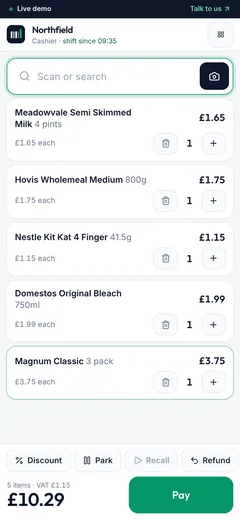
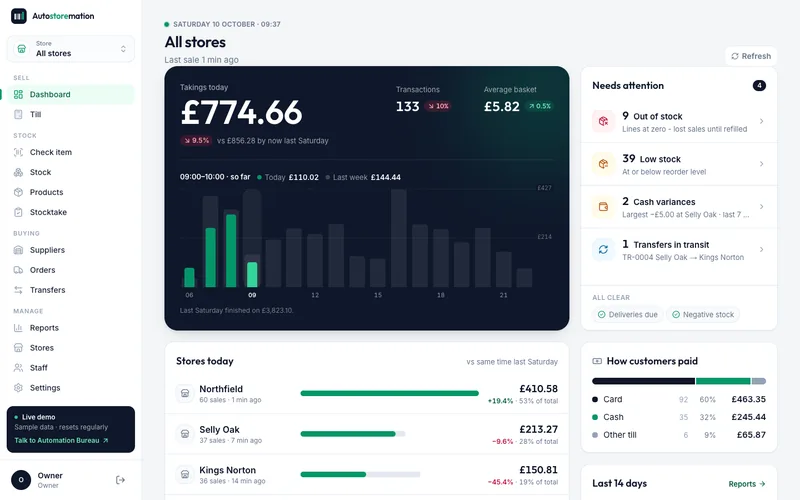 StockTillStock, till & reorders for shops
Open the demo
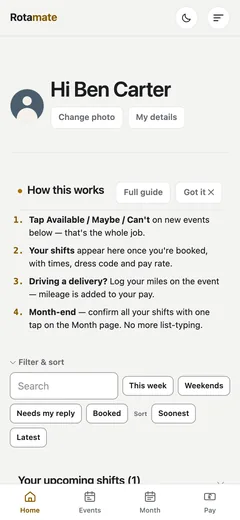
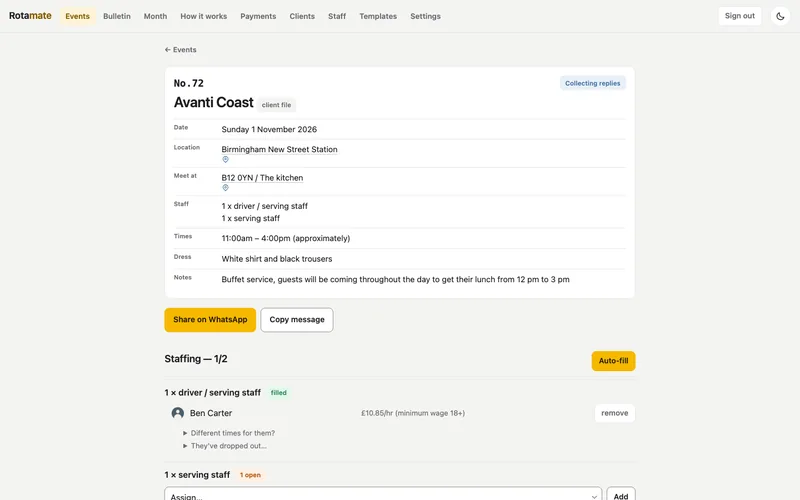 RotamateStaff rotas, filled over WhatsApp
Walk in as the manager
In practice
Tap one for a figure from
our worked example.
What you get
Tap one to see exactly
what is handed over.
We sit with the job as it is actually done - the spreadsheet, the inbox, the re-typing - cost it, then automate the half that is rules rather than judgement. The rest stays with your people, where it belongs.
How it starts: The two-minute check, or a conversation.
Most offices hold the same information in three places and keep them in step by hand. We connect them through their own APIs so a change in one is a change everywhere - and when a system has no API, we work out what it does have.
How it starts: Tell us the systems; we will say what is possible before quoting.
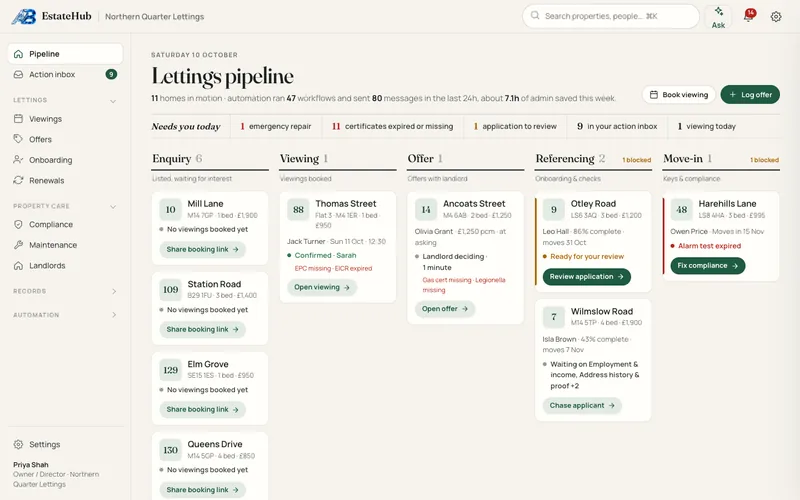
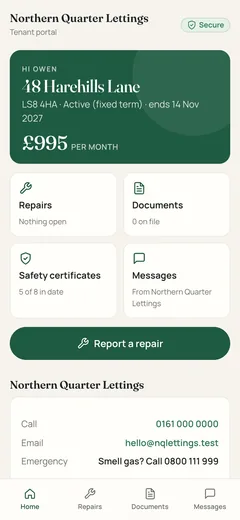
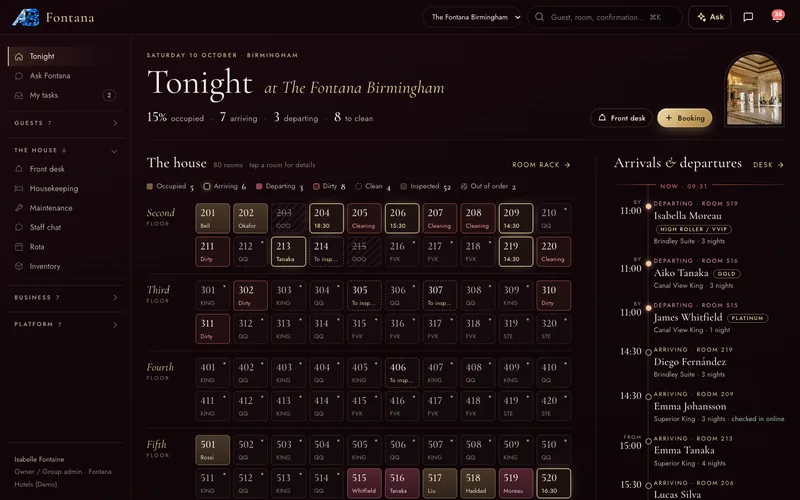
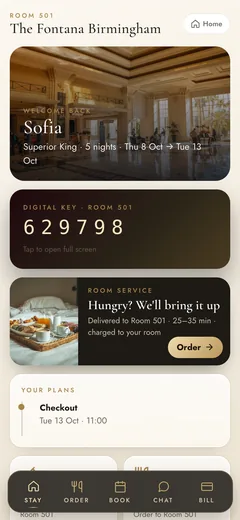
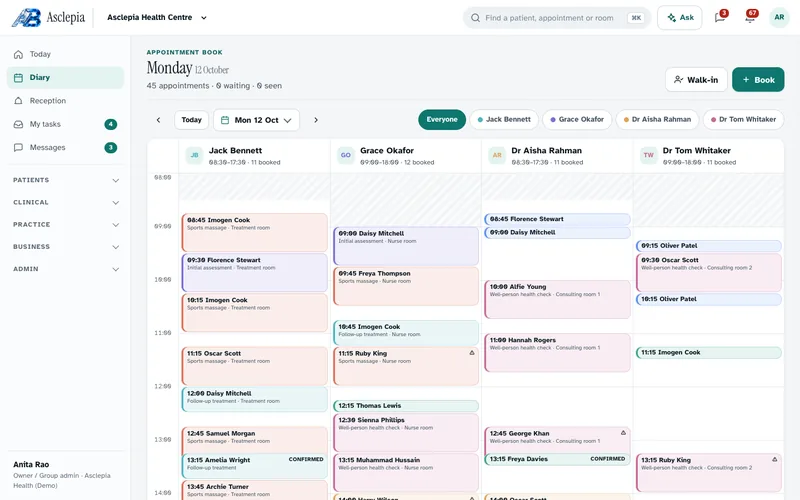
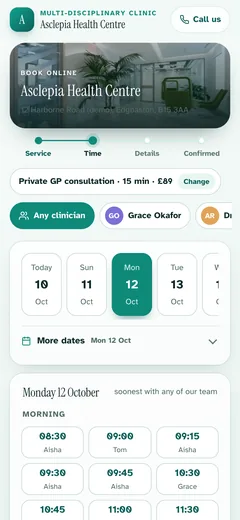
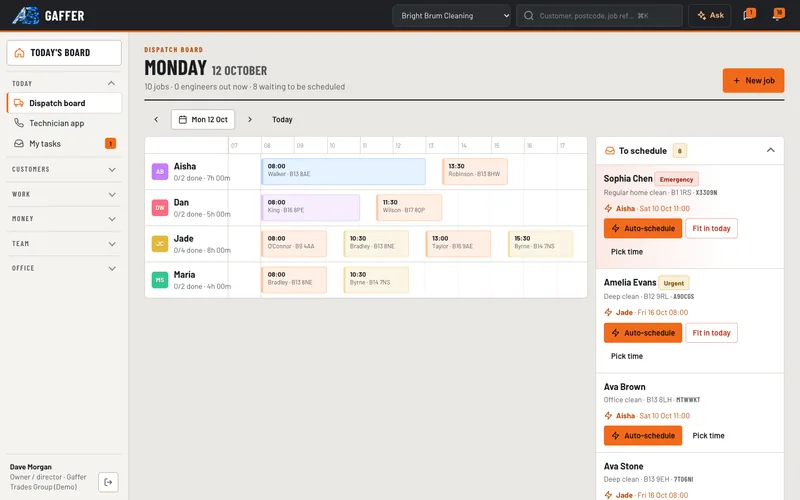
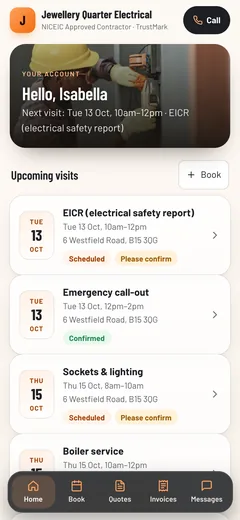
Lettings and sales agencies, hotels and accommodation, clinics and pharmacies, trades and field service, convenience retail. Each is ours, built on one shared engine, and each is demonstrated live before anything is agreed.
How it starts: Ask for a demo of the one that fits.
See all fiveEvery site we build ships with the technical groundwork already done, and we do the same work on sites we did not build. Not keyword stuffing: the structure, speed and plain answers that let a search engine - or ChatGPT - understand what you do and recommend you for it.
How it starts: Send us your address and we will tell you what is wrong with it, free.
We work out what the current way of working actually costs - hours, outsourcing, software that overlaps - then take it out: automate the repeatable part, bring routine work back in-house, and consolidate systems where fewer would do. Every change is priced on its own with its payback, so you maximise the return with complete transparency.
How it starts: The two-minute check, or a conversation.
Automation that nobody maintains becomes a liability the first time a supplier changes an API. We host, monitor and keep ours working, and we answer the phone.
How it starts: Included in every build we run.
Solutions
Who you are working with
Automation Bureau is built on more than a decade of professional experience across software, infrastructure, cloud engineering and operational technology.
That experience was built inside large-scale technology environments - five years at DPDgroup in software and systems engineering, then five years in Site Reliability Engineering, cloud and infrastructure at global scale - and behind it, a first-class degree in Computer Science.
In plain terms: what we build is made to keep working. It is watched, it tells you when it needs a person, and it is supported after it goes live.
A system that works during a demonstration is very different from a system a business can depend on every day.
How we work
Outsourcing earns its place for specialist skills or extra capacity. Routine work is often outsourced only because there was never a practical alternative. Where that has changed we bring it back: lower recurring cost, faster turnaround, less dependency. If outsourcing remains the better option, we will say so.
Manual work brings mistakes as well as cost: a figure copied wrongly, a task forgotten, a report built from last month's file. Automation does repeatable work the same way every time, checks its own results, and hands over to a person where judgement is needed.
Improving a business rarely means replacing its systems. Usually it means joining them up, removing manual steps and retiring tools that overlap. Where a replacement would genuinely help, we design and support that too.
Software changes, volumes grow, processes evolve. For the systems we deliver, IT support is available 24 hours a day, seven days a week, with monitoring and response built around how important the service is and uptime commitments defined in the agreed support SLA.
Free · a few taps · no account
Pick your kind of business and what would save you the most. If one of our live products already does it, you can open it and try it straight away. If not, we plan a free demo around you - and you only pay when you choose to go live.
Prefer a costed PDF report? Take the two-minute check → · See a worked example of the report →
Questions
We are IT automation specialists. We find the work in a business that is typed twice, waits on somebody, or is paid to an outside firm to do by hand, and we build and support the automation that removes it - every change costed, with a payback you can check.
The repeatable part of almost any process. Invoices and orders keyed in from PDFs or email, the same report rebuilt every week, data copied between two systems that do not talk, approvals chased by email before anything can move, spreadsheets reconciled line by line, and paperwork that waits in somebody's inbox. If a person follows the same steps each time, those steps can usually be done for them.
Every change is costed on its own, with what it gives back and how long until it has paid for itself, and the plan is ordered by payback so the fastest return comes first. We say plainly which parts are not worth automating, because a consultancy that recommends everything is selling hours.
The first change is deliberately a small one: the piece that can be built in days rather than a programme of work, and the one with the fastest payback. You see something running early and judge the rest of the plan on it, instead of waiting months to find out whether any of it was right.
Usually not. Most of what we build sits between the systems you already have and moves the work between them, so nobody has to learn a new tool or migrate anything. Where a tool is genuinely costing more than it returns we will say so, but replacing it is a decision, not a prerequisite.
No. What we need is somebody who knows how the work actually moves - usually the person doing it, not the person who manages them. Most of what we build sits between the systems you already have, so nobody has to learn a new tool or change how they work.
We support it round the clock. It tells you when it has run and when it needs a person, so nobody has to remember to check on it, and if something changes at your end - a supplier changes their invoice layout, a system gets updated - we fix it.
The shape of the process matters more than the headcount. If a few people repeat the same steps every week, there is usually something worth automating, and if they do not there probably is not. The savings check is the quickest way to find out: it works out what your own manual work costs before anybody talks about a project.
Yes, and we would rather they knew what we had built than found out later. We are usually adding something between systems rather than replacing what somebody already supports, so the people who look after those systems need to know it is there and what it does.
It will. A supplier changes an invoice layout, a system gets updated, a process moves. That is the normal life of an automation rather than a fault, and it is covered: it tells you when it has run and when it needs a person, and when something changes we fix it.
Nothing. It is eighteen one-tap questions, about two minutes, and no account. You get a savings report as a PDF: what manual work and outsourcing cost you now, what automating the repeatable part of it would save, and where to start.
Yes - it is one of the six things we are asked for. Every site we build ships with the technical groundwork already done, and we do the same work on sites we did not build: structured data so a search engine understands what each page is, a sitemap and canonical addresses so it indexes one page rather than five copies, a title and description written per page, Google Business Profile and opening hours wired up for local search, and the speed work that Core Web Vitals is scored on. It is not keyword stuffing, and we do not promise a position - nobody honestly can.
It is the same work as being found by Google, done for a reader that quotes rather than links. An assistant can only recommend a business whose pages state plainly what it does, where, and for whom - so the answer pages that help a customer are the ones an assistant quotes. We also publish an llms.txt, which tells an AI reader which pages describe the business and how to describe it, and we keep it in step with the site rather than writing it once.
Across the United Kingdom. The work is done remotely, with visits where a project needs them.
Then we say so, before it is built rather than after. Every change is costed on its own with its own payback, so one that does not earn its cost is visible at the plan stage. We would rather tell you three things are worth doing than pretend seven are.
Start with the free consultation, or just talk to us - whichever suits.